

The difference between good and great GTM teams often comes down to what they’ve automated. While some teams still spend hours on manual data entry and spreadsheet gymnastics, the best teams have built systems that run themselves. What does a GTM Engineer do? They design, build, and maintain these systems.
This guide covers 10 real-world business process automation examples that GTM Engineers are implementing in 2026. These aren’t theoretical use cases. They’re battle-tested workflows that reduce ops debt, improve data quality, and let your team focus on revenue-generating work instead of administrative tasks.
What is business process automation?
Business process automation (BPA) is using technology to execute repetitive workflows without manual intervention. In revenue operations, this means anything from automatically enriching lead data to calculating commissions without touching a spreadsheet.
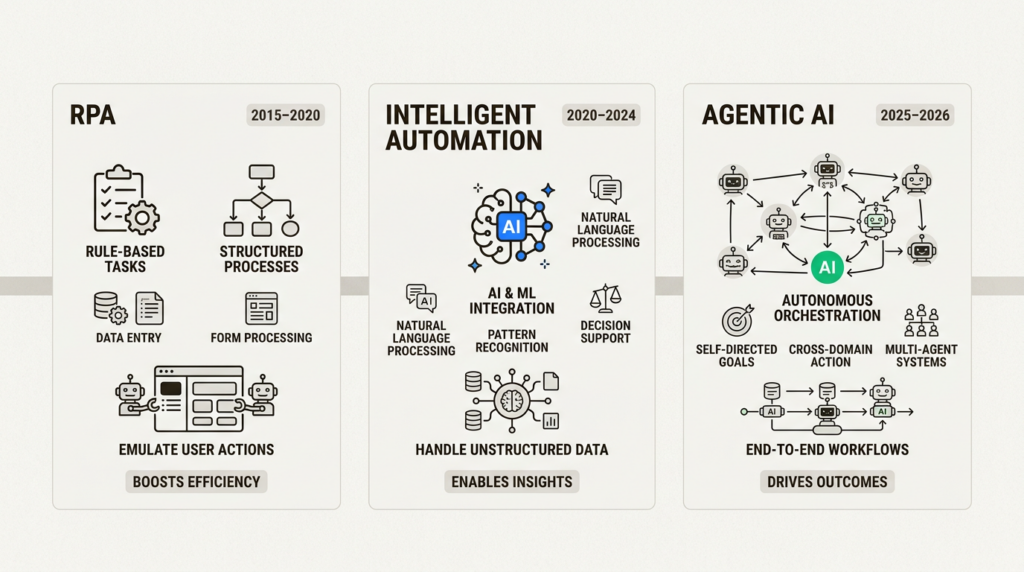
The field has evolved significantly over the past few years:
- RPA (Robotic Process Automation) handled simple, rule-based tasks with the same steps every time
- Intelligent Automation added AI for handling unstructured data and basic decision-making
- Agentic AI (2026) enables systems that can reason, plan, and orchestrate end-to-end workflows with minimal oversight
For GTM Engineers, automation isn’t about replacing humans. It’s about eliminating the work that shouldn’t require human judgment in the first place. The skills and tech stack required to build these systems are increasingly part of the job description.
The key distinction: GTM automation focuses on revenue impact. Every automated workflow should either accelerate pipeline, improve conversion rates, or reduce customer acquisition costs.
Lead enrichment and routing automation
The problem: Sales reps spend hours researching leads before they can even start selling. Meanwhile, hot leads sit unassigned for days because routing rules are manual or inconsistent.
The automation: When a lead hits your CRM, it triggers a workflow that enriches the record in real-time using data providers like Clearbit or ZoomInfo, scores it based on fit and intent signals, and routes it to the right rep based on territory, industry, or account size.
Tools to consider:
- Clay for AI-powered enrichment and waterfall data providers
- Hightouch for Reverse ETL from your warehouse to CRM
- Salesforce assignment rules or LeanData for routing logic
Technical implementation: A warehouse-first approach works best here. Store your enrichment data in Snowflake, run dbt models to calculate lead scores, then use Reverse ETL to sync enriched records back to Salesforce. This gives you a single source of truth and makes debugging easier when routing rules go wrong.
The ROI: Teams using automated lead routing typically see lead response times drop from 24+ hours to under 2 minutes. AI lead generation strategies depend on this foundation.
Quote-to-cash workflow automation
The problem: Complex pricing, approval bottlenecks, and manual contract generation slow down deals. Reps waste time chasing approvals instead of selling.
The automation: An opportunity stage change triggers CPQ calculations, routes quotes through approval workflows based on discount thresholds, generates contracts via DocuSign, and syncs everything to your billing system.
Tools to consider:
- Salesforce CPQ for complex product configuration
- PandaDoc or Ironclad for contract generation
- Stripe Billing for subscription management
Technical implementation: This requires solid API orchestration. Your CPQ needs to talk to your CRM, your contract tool needs to pull quote data, and your billing system needs to know when deals close. Webhook handling and error logging are critical here. When a quote gets stuck, you need to know exactly where and why.
The ROI: Quote generation time typically drops from days to hours. More importantly, you eliminate pricing errors that create downstream chaos in billing and revenue recognition.
Customer onboarding automation
The problem: New customers experience inconsistent handoffs between sales and success. Provisioning takes too long, and time-to-value suffers.
The automation: A closed-won trigger starts a sequence: welcome email with next steps, automatic provisioning in your product, training assignment in your LMS, and a CSM notification with context from the sales cycle.
Tools to consider:
- Catalyst or Vitally for customer success automation
- Workato or Zapier for cross-system orchestration
- Native CRM workflows for simpler setups
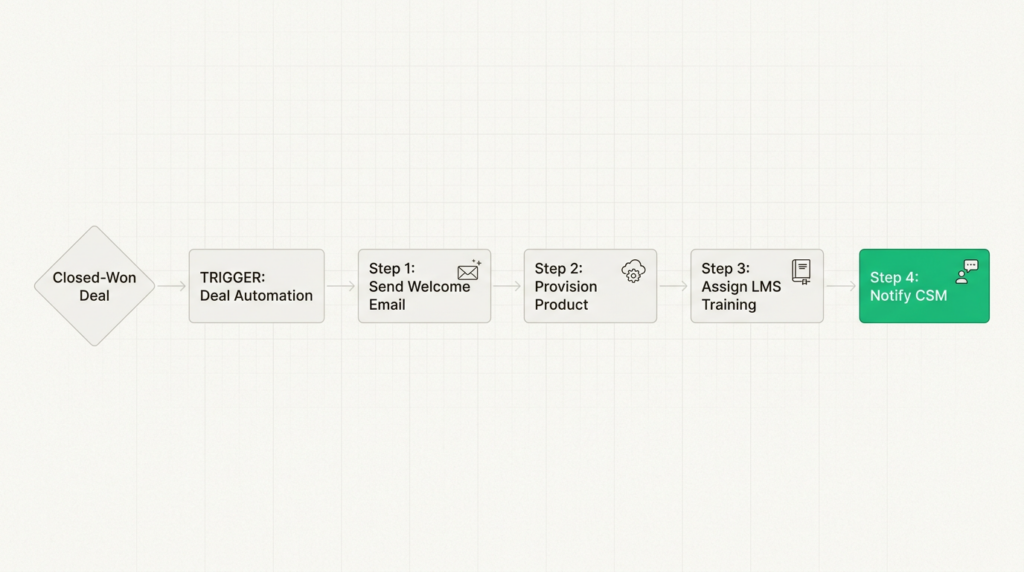
Technical implementation: This is fundamentally about cross-system orchestration. Your CRM needs to trigger actions in your product database, your email platform, and potentially your LMS. The trick is maintaining state across systems. If a customer skips onboarding, that signal should propagate everywhere.
The ROI: Automated onboarding typically reduces time-to-first-value by 40%. That translates directly to higher retention and expansion rates.
Commission calculation automation
The problem: Finance teams spend weeks each month calculating commissions in spreadsheets. Reps dispute calculations. Nobody trusts the numbers.
The automation: Attribution rules pull data from your CRM, calculate commissions based on plan logic, route exceptions for approval, and generate payout statements.
Tools to consider:
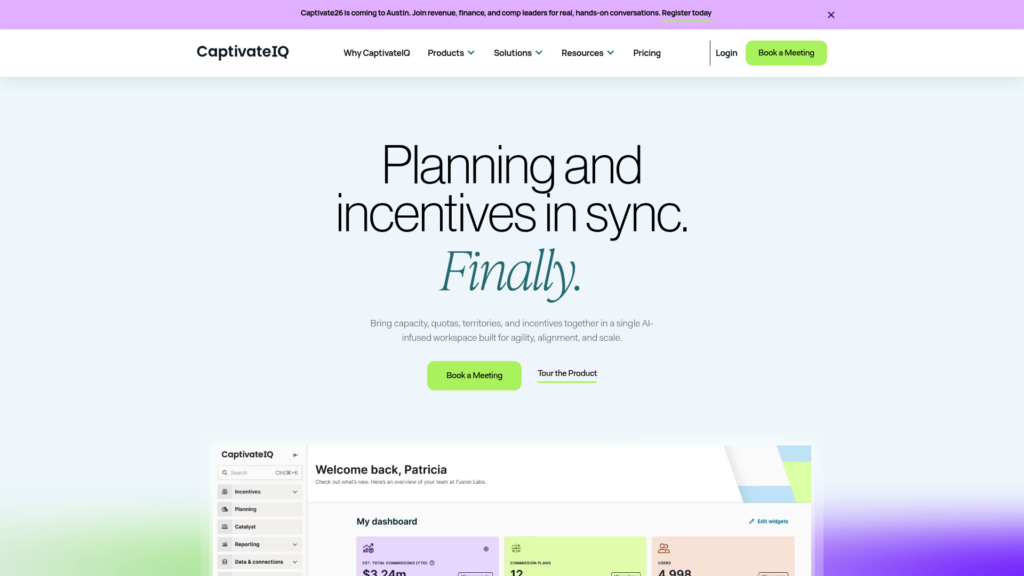
- CaptivateIQ for enterprise-grade commission management
- Spiff for simpler implementations
- Custom Python/SQL solutions for teams with strong data engineering
Technical implementation: The hard part isn’t the math. It’s handling edge cases: deal splits, clawbacks, multi-year deals with changing terms, and mid-period plan changes. Your system needs audit trails for every calculation so when a rep asks “why did I get paid X?” you can trace the answer.
The ROI: Commission cycles typically compress from 2 weeks to 2 days. More importantly, you eliminate the month-end crunch that burns out your finance team.
Territory assignment and account routing
The problem: Manual territory balancing is subjective and slow. Account conflicts create friction between reps. New hires wait weeks for book assignments.
The automation: Account scoring models identify high-value targets, territory matching algorithms assign accounts based on capacity and expertise, and reps get notified with context about their new accounts.
Tools to consider:
- Salesforce Territory Management for native functionality
- Custom assignment rules in your CRM
- CaptivateIQ’s territory planning module for complex scenarios
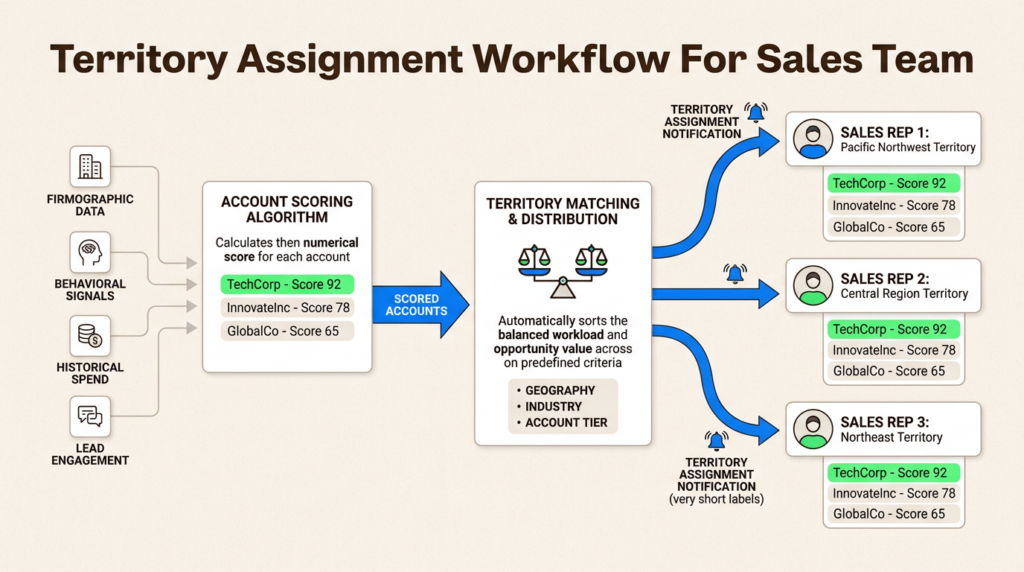
Technical implementation: This requires geocoding, industry classification, and balanced allocation algorithms. You need to consider account potential, rep capacity, and historical relationships. The goal is fairness, but “fair” is surprisingly hard to define programmatically.
The ROI: Automated territory assignment eliminates disputes and gets new reps productive faster. One less source of inter-team conflict.
TAM and account research automation
The problem: SDRs and AEs spend hours researching accounts manually. The quality varies wildly. Some reps do deep research; others barely check the website.
The automation: An account list feeds AI research agents that gather firmographic data, technographic signals, recent news, and trigger events. Results are structured, scored, and prioritized automatically.
Tools to consider:
- Clay for AI-powered research agents
- OpenAI API or Perplexity API for custom solutions
- Custom scrapers for specific data sources
Technical implementation: LLM orchestration with structured output is key. You need to prompt the AI to return data in a consistent format that maps to your CRM fields. Error handling matters here too. When an AI research call fails, you need to know and potentially retry. Clay alternatives exist for teams with different technical requirements.
The ROI: Research that used to take weeks now takes hours. One team we talked to enriched 1,000 accounts in an afternoon that would have taken a month manually.
Expense and procurement approval workflows
The problem: Expense reports sit in email chains. Procurement requests get lost. Policy violations slip through because nobody checks every submission manually.
The automation: Submissions trigger policy checks against predefined rules, route to approvers based on amount and category, and sync approved expenses to your ERP.
Tools to consider:
- Ramp or Brex for modern expense management
- Custom approval flows in your CRM or workflow tool
- Coupa or Procurify for procurement-specific needs
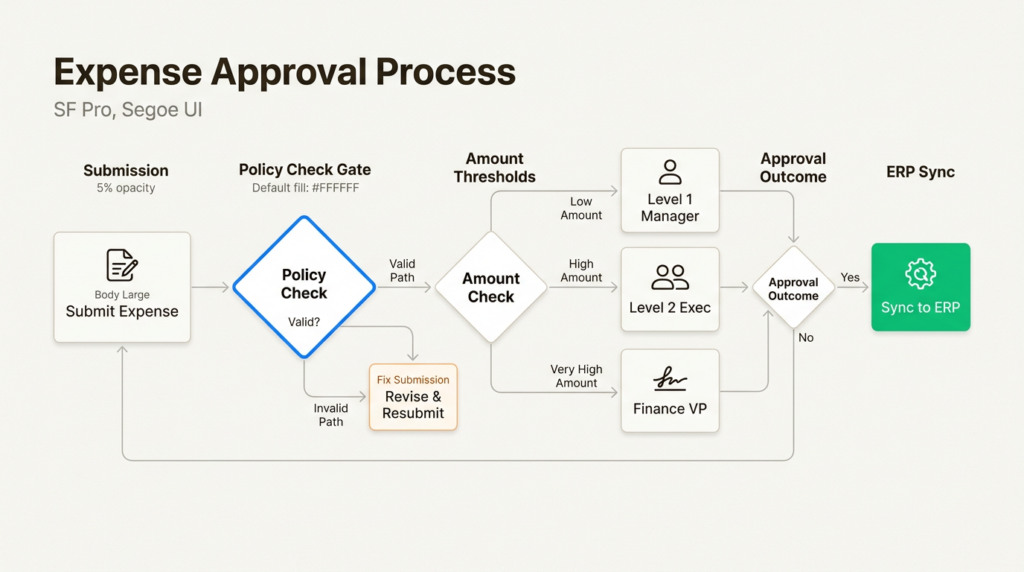
Technical implementation: Conditional logic handles spend limits, category restrictions, and multi-currency requirements. The integration with your ERP is where most implementations stumble. Test your chart of account mappings thoroughly.
The ROI: Finance teams save hours on expense processing. Policy compliance improves because violations are caught automatically, not in hindsight during month-end close.
Support ticket routing and escalation
The problem: Tickets get assigned to the wrong team. SLAs are missed because nobody noticed a high-priority ticket sitting in the queue. Customers get frustrated repeating their issue to multiple agents.
The automation: NLP classifies ticket intent, priority scoring identifies urgent issues, auto-assignment routes to the right team, and escalation rules notify managers when SLAs are at risk.
Tools to consider:
- Zendesk AI for native ticket intelligence
- Intercom for conversational support
- Custom ML models for specialized classification needs
Technical implementation: The NLP model needs training on your historical tickets. Start with simple classification (billing vs technical vs sales) before attempting fine-grained routing. Monitor accuracy and have a fallback to human triage when confidence is low.
The ROI: First-response times typically improve 30% with proper routing. More importantly, resolution times drop because tickets reach the right agent the first time.
Marketing attribution and reporting automation
The problem: Marketing teams argue about which channels drive revenue. Attribution is based on gut feel, not data. Reports are stale by the time they’re delivered.
The automation: Touchpoint capture tracks every interaction, multi-touch attribution models distribute credit across channels, and dashboards refresh automatically with real-time data.
Tools to consider:
- HockeyStack or Dreamdata for B2B attribution
- dbt models for custom attribution logic
- Hightouch for Reverse ETL to CRM
Technical implementation: This is where your data warehouse becomes critical. You need clean event data, proper identity resolution, and attribution models defined in SQL. Reverse ETL pushes the final attributed revenue back to your CRM so sales sees the same numbers marketing does. How GTM Engineers support AI-driven strategies often starts with this data foundation.
The ROI: Real-time visibility into CAC by channel lets you reallocate spend faster. No more waiting until month-end to discover a channel stopped performing two weeks ago.
Data hygiene and deduplication automation
The problem: Duplicate records break reporting. Stale data makes personalization impossible. Manual cleanup projects happen once a quarter and never finish.
The automation: Scheduled scans identify potential duplicates, matching algorithms score similarity, and merge or alert actions keep your database clean continuously.
Tools to consider:
- RingLead or DemandTools for Salesforce-native deduplication
- Custom SQL or Python scripts for warehouse-based matching
- Open source tools like Splink for probabilistic matching
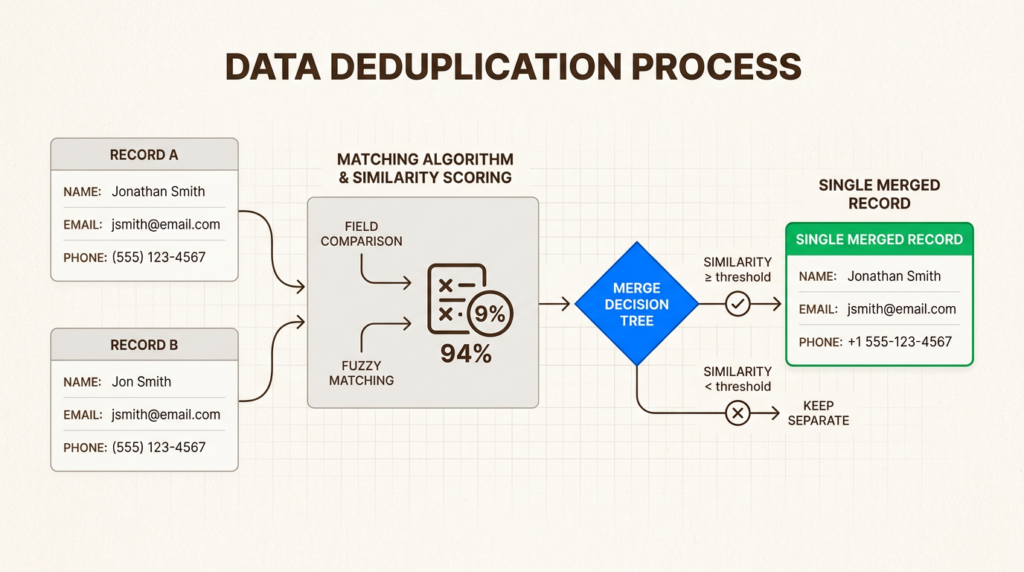
Technical implementation: Fuzzy matching handles name variations and typos. Survivorship rules determine which field values win when records merge. The hard part is tuning sensitivity. Too strict and you miss duplicates; too loose and you merge different companies.
The ROI: One company reduced duplicate records by 90% with automated deduplication. Their account-based marketing campaigns finally started working because they were targeting the right people.
Automation examples at a glance
| Automation example | Primary tools | Complexity | TTV | Best for |
|---|---|---|---|---|
| Lead enrichment | Clay, Hightouch | Medium | 1-2 weeks | High-volume inbound |
| Quote-to-cash | Salesforce CPQ, PandaDoc | High | 4-8 weeks | Complex pricing |
| Customer onboarding | Catalyst, Vitally | Medium | 2-4 weeks | PLG/SaaS companies |
| Commission calc | CaptivateIQ, Spiff | High | 4-6 weeks | Large sales teams |
| Territory routing | Salesforce TM, custom | Low | 1-2 weeks | Growing teams |
| TAM research | Clay, OpenAI API | Medium | 1-2 weeks | ABM programs |
| Expense approvals | Ramp, Brex | Low | 1 week | All companies |
| Ticket routing | Zendesk AI, Intercom | Medium | 2-3 weeks | Support teams |
| Attribution | HockeyStack, dbt | High | 4-6 weeks | Marketing ops |
| Data hygiene | RingLead, custom | Low | 1 week | Data-driven teams |
Getting started with GTM automation
Start with one high-impact, low-complexity workflow. The temptation is to automate everything at once. Resist it. Pick a process that:
- Happens frequently (daily or weekly)
- Has clear rules (not subjective judgment calls)
- Causes real pain when it breaks
Audit your current processes for manual handoffs and delays. Map the flow from trigger to completion. Every handoff is a candidate for automation.
When deciding build vs buy, consider your team’s technical capacity. Custom solutions give you flexibility but create maintenance burden. Off-the-shelf tools get you running faster but may not fit your exact workflow.
Most importantly, avoid automation for automation’s sake. Every automated workflow should have a clear revenue impact. If you can’t articulate how an automation drives pipeline, improves conversion, or reduces CAC, reconsider whether it’s worth building.
The 20 best GTM tools for 2025 include several platforms that make these automations possible without engineering resources. For teams deciding on hiring strategy, understanding the difference between GTM Engineers, Sales Engineers, and Solutions Engineers helps clarify who should own these projects.
Frequently Asked Questions
What are the best business process automation examples for small GTM teams?
Start with lead enrichment and data hygiene. These have immediate impact without requiring complex cross-system integrations. Tools like Clay make enrichment accessible even for teams without dedicated data engineers.
How long does it typically take to implement business process automation examples like these?
Time-to-value varies by complexity. Simple workflows like expense approvals can be live in a week. Complex orchestrations like quote-to-cash might take 6-8 weeks.
What skills do GTM Engineers need to build these business process automation examples?
SQL for data manipulation, API fundamentals for integrations, and workflow design thinking. The specific stack varies: Python for custom logic, dbt for data transformations, or no-code tools like Workato for simpler flows.
Should we build custom automation or buy off-the-shelf tools for these business process automation examples?
Buy when the problem is common and the tool fits your workflow. Build when you have unique requirements that off-the-shelf tools can’t handle, or when the integration complexity makes custom code cleaner.
How do we measure ROI on business process automation examples?
Track time saved, error rates, and speed metrics. But also measure business outcomes: faster lead response correlates with higher conversion. Cleaner data improves campaign performance.
What are common mistakes when implementing business process automation examples?
Automating broken processes (fix the process first), neglecting error handling (every automation fails eventually), and building without stakeholder buy-in (sales needs to trust the lead routing rules).
Leave a Reply