

Here’s a reality check: in 2026, your brand reputation is being shaped by conversations you aren’t part of. From Reddit threads complaining about your onboarding to ChatGPT recommending your competitor, brand mentions happen whether you’re listening or not.
The tools in this guide do more than send alerts when someone tags you on X. They track what people say about you across social media, news sites, review platforms, and increasingly, what AI engines like ChatGPT and Perplexity say when asked about your industry.
We’ve tested and compared the leading brand mention tools to help GTM teams monitor reputation, track competitors, and capture intent signals. Whether you’re a RevOps leader trying to prove competitive win rates or a Marketing Ops manager building an early warning system for PR crises, this guide will help you find the right fit.
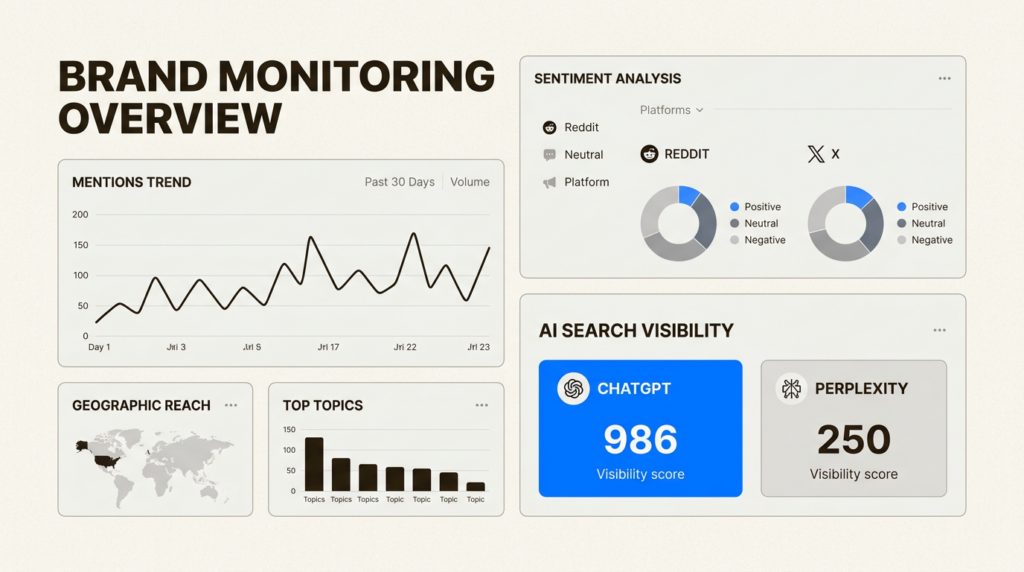
What Are Brand Mention Tools?
Brand mention tools are software platforms that track references to your company, products, or keywords across digital channels. They collect mentions from social media, news sites, blogs, forums, reviews, and increasingly, AI search engines.
Here’s the short version of how the landscape has evolved:
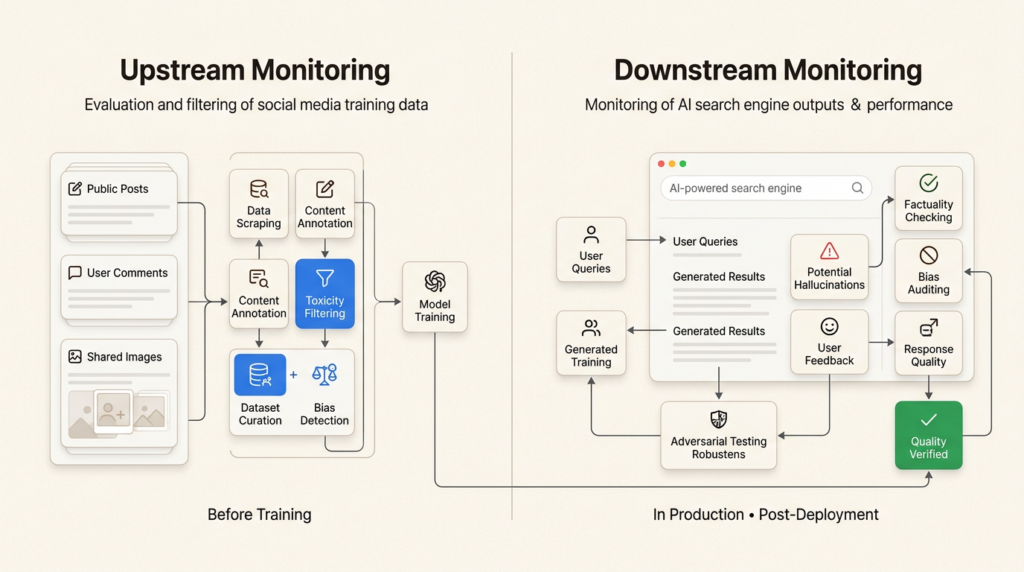
Traditional social listening (upstream monitoring) tracks human conversations on Reddit, X, LinkedIn, and news sites. This is the training data that feeds AI models.
AI monitoring (downstream monitoring) tracks what LLMs actually generate when users ask about your brand or category. This is the output your potential customers see.
The best brand mention tools in 2026 cover both layers. You need to know what people are saying about you AND what AI engines are saying about you.
Comparison at a Glance
| Tool | Starting Price | Free Trial | AI Monitoring | Best For |
|---|---|---|---|---|
| Brand24 | $199/mo | 14 days | No | Affordable comprehensive monitoring |
| Mention | $599/mo | Demo | No | Real-time crisis monitoring |
| Brandwatch | Custom (~$800+/mo) | Demo | No | Enterprise social intelligence |
| Sprout Social | $199/mo + $999/mo listening | 30 days | No | Social management + listening combined |
| Meltwater | Custom (~$500+/mo) | Demo | No | PR and media monitoring |
| GetMint | €79/mo | Yes | Yes (AI-native) | AI search visibility tracking |
| Semrush | $117/mo | Yes | Yes (add-on) | SEO + AI visibility combined |
How We Evaluated These Tools
We assessed each tool across criteria that matter to GTM teams:
- Time-to-value (TTV): How quickly can you get actionable insights?
- Total cost of ownership (TCO): Hidden fees, per-seat pricing, add-on costs
- API and integrations: Can you pipe data into your existing stack?
- Data export options: CSV, JSON, warehouse connectors
- AI monitoring capabilities: Does it track LLM outputs or just social?
Let’s break down each tool.
1. Brand24
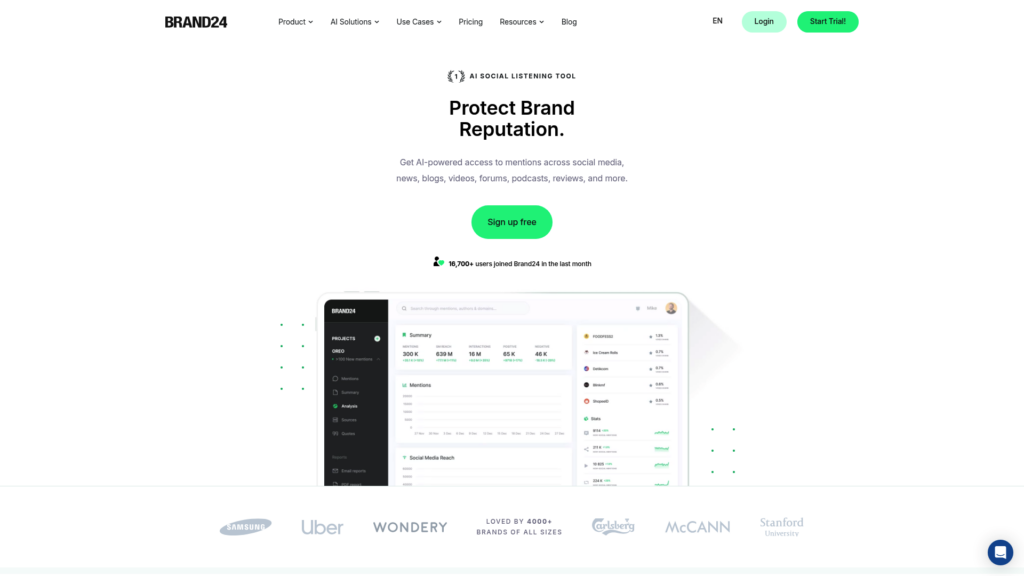
Brand24 positions itself as the “#1 AI Social Listening Tool” and serves 4,000+ brands including Samsung, Uber, and Stanford. It’s the most balanced option for teams wanting comprehensive monitoring without enterprise budgets.
Key Features
Brand24 monitors across an impressive range of sources: Facebook, Instagram, X, TikTok, LinkedIn, YouTube, Reddit, Twitch, news sites, blogs, Medium, Quora, reviews, newsletters, and podcasts.
The AI features are where it stands out at this price point. You get AI sentiment analysis, topic analysis, insights, events detection, an AI Brand Assistant (think ChatGPT trained on your monitoring data), emotion analysis, and anomaly detection. The anomaly detection is particularly useful for spotting sudden spikes in mentions that might indicate a viral moment or emerging crisis.
Pricing
| Plan | Monthly | Annual | Keywords | Mentions | Users | Updates |
|---|---|---|---|---|---|---|
| Individual | $249 | $199 | 3 | 2,000 | 1 | 12 hours |
| Team | $349 | $299 | 7 | 10,000 | Unlimited | Hourly |
| Pro | $499 | $399 | 12 | 40,000 | Unlimited | Real-time |
| Business | $699 | $599 | 25 | 100,000 | Unlimited | Real-time |
| Enterprise | Custom | From $1,499 | Custom | Custom | Unlimited | Real-time |
Source: Brand24 pricing
The 14-day free trial requires no credit card, and there’s a 30-day money-back guarantee. API access costs an additional $99/month.
Pros and Cons
Pros:
- Unlimited users on Team+ plans (rare in this category)
- Strong AI features for the price
- Covers virtually every source you’d want to monitor
- Fast setup with immediate insights
Cons:
- 12-hour update cycles on the Individual plan (too slow for crisis management)
- No AI engine monitoring (won’t track what ChatGPT says about you)
- API is an expensive add-on
GTM Use Case
Brand24 excels at competitive intelligence for sales teams. Set up alerts for your competitors’ brand names plus keywords like “alternative” or “switching from.” When someone complains about a competitor’s pricing or feature gap, your sales team gets an immediate alert with context. This turns brand monitoring into a lead generation channel.
2. Mention
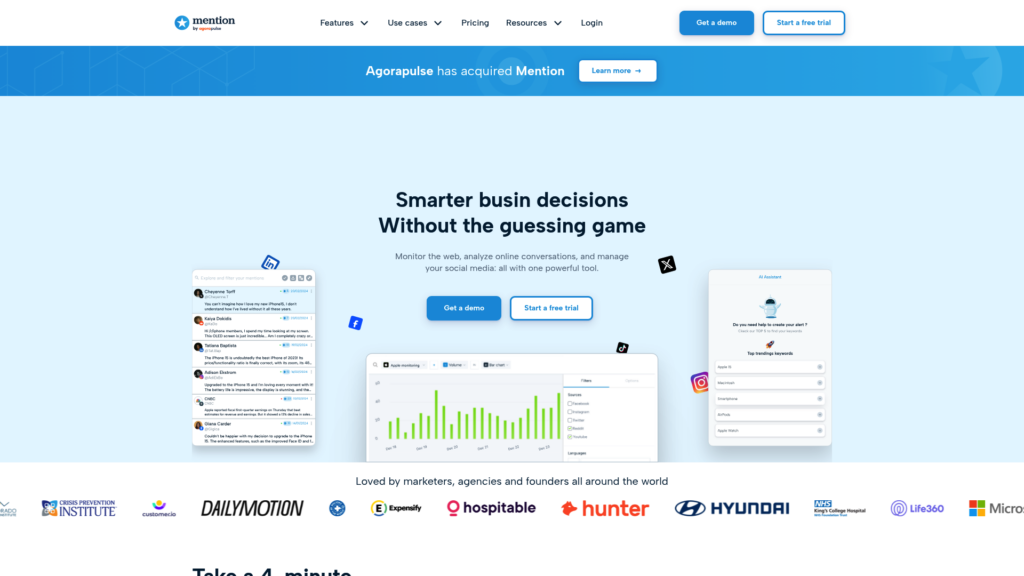
Mention focuses on real-time monitoring and crisis prevention. It’s now part of the Agorapulse family, which means tight integration if you’re already using Agorapulse for social media management.
Key Features
Mention tracks mentions across social platforms (Facebook, Instagram, X, Reddit, TikTok, Pinterest, YouTube), web sources (news, blogs, forums), and 75+ review sites including Google, Trustpilot, Amazon, and Glassdoor.
The Boolean search capabilities let you build complex queries up to 2,000 characters. This is essential for filtering out noise when your brand name is a common word. Historical data access means you can research past conversations, not just monitor going forward.
Pricing
Mention has simplified to a single tier:
| Plan | Monthly | Annual | Notes |
|---|---|---|---|
| Company | $599 | $599 (save $360/year) | Starting price, custom for larger needs |
The Company plan includes real-time tracking, Boolean search, sentiment analysis, competitor benchmarking, share of voice tracking, API access, white-label reporting, and a dedicated account manager.
Source: Mention pricing
Pros and Cons
Pros:
- Fastest alerts in the category (real-time)
- Clean, intuitive interface
- Strong Boolean search for complex filtering
- White-label reporting for agencies
Cons:
- No free self-serve trial (demo required)
- Single pricing tier may be overkill for small teams
- No AI engine monitoring
GTM Use Case
Mention shines for PR crisis management. The real-time alerts and sentiment tracking let you catch negative mentions before they spiral. The white-label reporting is valuable for agencies managing reputation for multiple clients. If your GTM strategy includes proactive PR and crisis preparedness, Mention delivers.
3. Brandwatch
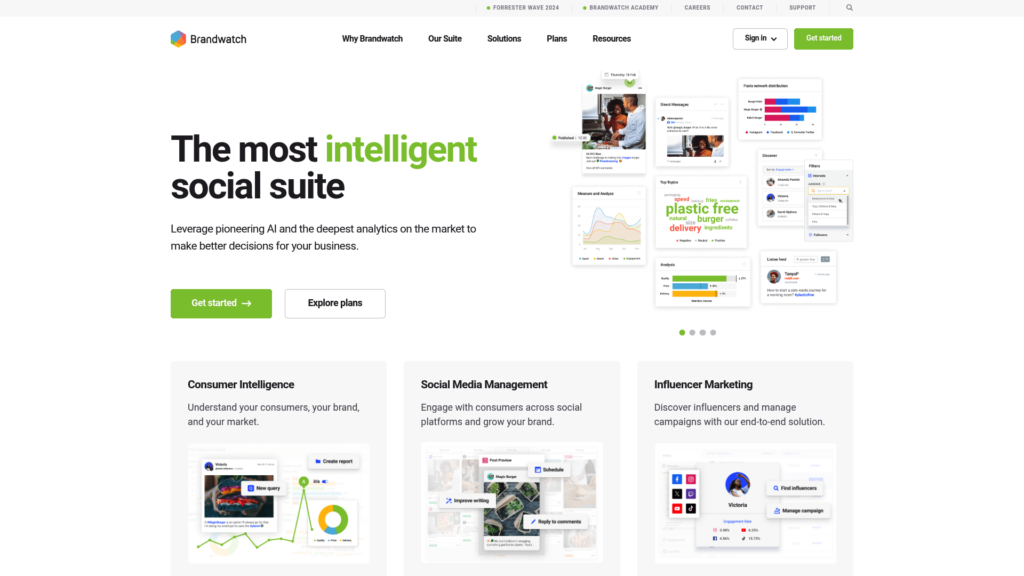
Brandwatch is the enterprise standard for social intelligence. It’s expensive, complex, and powerful. If you’re a Series C+ company with dedicated analysts, this is worth considering. For everyone else, it’s probably overkill.
Key Features
Brandwatch monitors 30+ digital channels including social media, news, blogs, forums, reviews, YouTube, and surveys. The standout feature is visual listening: AI image recognition that identifies your logo in images even when your brand isn’t mentioned by name. This catches “visual mentions” like your product appearing in viral memes.
The Iris AI assistant summarizes thousands of social posts to explain why spikes are happening. Instead of just seeing that mentions increased 300%, Iris tells you “Viral meme regarding shipping delays driving conversation.”
Pricing
Brandwatch doesn’t publish pricing. All plans require custom quotes.
| Tier | Estimated Monthly | Annual Estimate | Typical Use Case |
|---|---|---|---|
| Basic/Entry | $800-$2,000 | $10,000-$24,000 | Small research teams, 3-5 users |
| Professional | $2,000-$5,000 | $24,000-$60,000 | Mid-market teams, 10+ users |
| Enterprise | $5,000-$15,000+ | $60,000-$150,000+ | Large organizations |
Additional costs include setup/onboarding ($500-$2,000+), custom dashboards (~$500/month), and API integrations ($1,000+ per project). Annual contracts are standard with no monthly billing.
Pros and Cons
Pros:
- Unrivaled data depth across social channels
- Visual listening catches image-based mentions
- Enterprise-grade crisis management
- AI summarization for large datasets
Cons:
- Extremely expensive
- Steep learning curve (1-3 months for proficiency)
- No AI engine monitoring (tracks human conversations, not LLM outputs)
- Requires dedicated analysts to extract value
GTM Use Case
Brandwatch is built for global brand health tracking. If you’re managing reputation across multiple markets, need to track visual brand presence, or have the team to dig into deep social intelligence, it delivers insights other tools can’t match. For most GTM teams, the cost and complexity outweigh the benefits.
4. Sprout Social
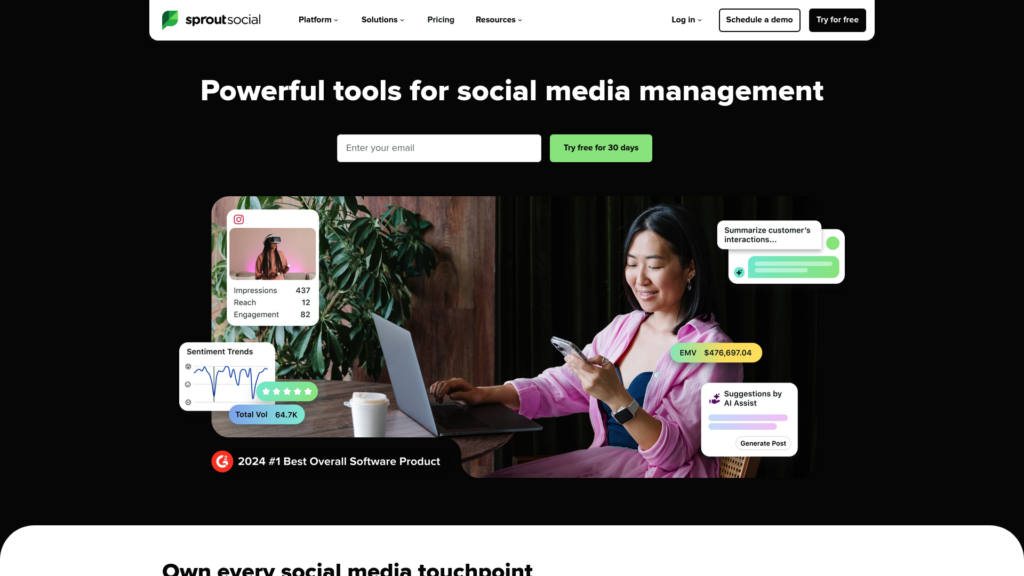
Sprout Social combines social media management (publishing, engagement) with social listening available as an add-on. If you want a unified workflow for managing AND monitoring social, this is worth considering.
Key Features
The base platform includes publishing, content planning, engagement tools, review management, and analytics. The Listening add-on (sold separately) adds brand mention monitoring, Smart Categories (AI topic identification), sentiment tracking, and Spike Alerts for sudden volume changes.
AI features include AI-generated alt text, optimal send times, Enhance Post (AI writing assistance), and Enhance Reply (AI-assisted response suggestions on Advanced+ plans).
Pricing
Base Plans (per seat):
| Plan | Monthly | Annual | Social Profiles | Key Features |
|---|---|---|---|---|
| Standard | $249 | $199 | 5 | Keyword monitoring, review management |
| Professional | $399 | $299 | Unlimited | Competitor insights, paid insights |
| Advanced | $499 | $399 | Unlimited | Sentiment analysis, API access, Spike Alerts |
| Enterprise | Custom | Custom | Unlimited | White-glove onboarding, SSO |
Listening Add-on: Approximately $999+/month additional
Source: Sprout Social pricing
Pros and Cons
Pros:
- Unified social management + listening workflow
- Strong AI-assisted engagement features
- 30-day free trial
- Excellent reporting and analytics
Cons:
- Listening is expensive add-on (not included in base price)
- Per-seat pricing multiplies costs quickly
- Total cost can exceed $1,400/month for one user with listening
- No AI engine monitoring
GTM Use Case
Sprout Social makes sense if you’re already managing social media publishing and want listening in the same platform. The unified workflow saves time, but you pay for it. For pure brand monitoring (without publishing needs), you’re better served by dedicated tools like Brand24 or Mention at lower cost.
5. Meltwater
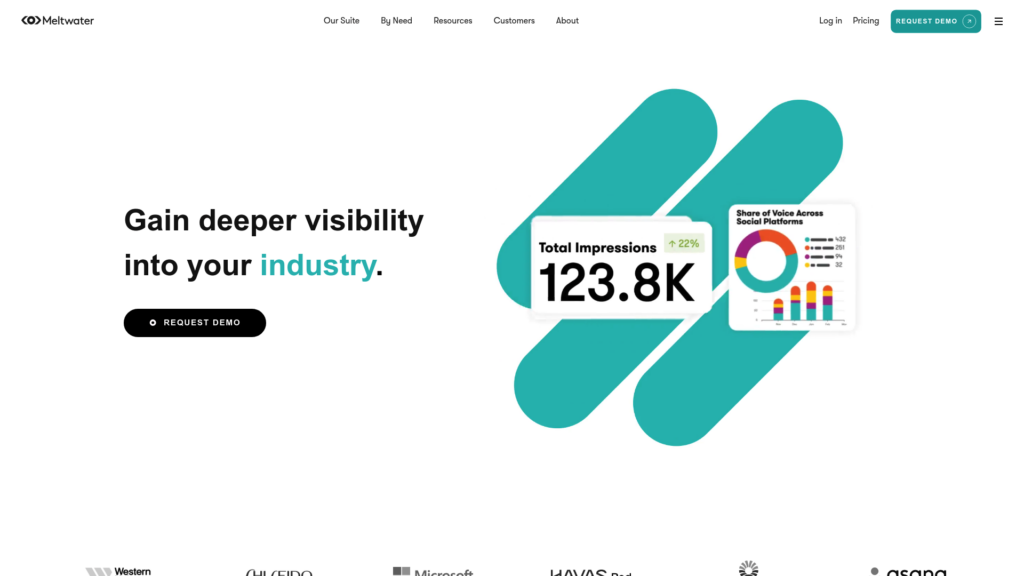
Meltwater is the legacy player in media monitoring, tracking 270M+ sources including traditional media, social media, and broadcast TV/radio. It’s built for PR and communications teams, not social media managers.
Key Features
Meltwater’s strength is breadth: news sites, blogs, forums, social media, TV, radio, and podcasts. The platform includes a PR database with 275,000+ journalist contacts and the Klear influencer suite for creator discovery and campaign management.
The media intelligence features include real-time monitoring, 12-month historical data (24-month on higher tiers), sentiment analysis, and competitive benchmarking.
Pricing
Meltwater uses custom, quote-based pricing.
| Tier | Annual Estimate | Best For | Users |
|---|---|---|---|
| Essentials | $6,000-$15,000 | Startups, small marketing teams | 1-5 |
| Suite | $15,000-$35,000 | Mid-market PR/marketing teams | 5-15 |
| Enterprise | $40,000-$100,000+ | Large enterprises, agencies | 15+ |
Implementation costs range from $5,000-$25,000. Contracts require 90-180 day notice for cancellation. No free trial (demo only).
Pros and Cons
Pros:
- Massive source coverage including broadcast
- Journalist and influencer databases
- Long historical data access
- Strong for PR-driven GTM strategies
Cons:
- Expensive with complex implementation
- Auto-renewal clauses require early cancellation notice
- Overkill for pure social monitoring
- No AI engine monitoring
GTM Use Case
Meltwater fits organizations with PR-driven go-to-market strategies. If you’re doing media relations, press release distribution, and crisis communications, the journalist database and broadcast monitoring justify the cost. For digital-first GTM teams focused on social and AI search, there are more cost-effective options.
6. GetMint
GetMint is the only tool on this list built specifically for AI-native brand monitoring. While other tools track what humans say on social media, GetMint tracks what AI engines say about you.
Key Features
GetMint monitors outputs from ChatGPT, Perplexity, Claude, Gemini, Google AI Overviews, Microsoft Copilot, Mistral, Grok, and Meta AI. It tracks your brand visibility in AI answers, sentiment of AI mentions, and whether AI descriptions align with your brand positioning.
The source diagnosis feature traces AI mentions back to the specific URLs feeding that information. If Perplexity claims your product is “expensive,” GetMint identifies exactly which review or blog post taught it that opinion.
Content optimization features include GEO (Generative Engine Optimization) workflows, content optimization credits, and an AI search strategist to help improve your AI visibility.
Pricing
| Plan | Monthly | Annual | Brands | Prompts | Countries | Refresh |
|---|---|---|---|---|---|---|
| Starter | €99 | €79 | 1 | 50 | 1 | Weekly |
| Growth | €299 | €239 | 1 | 200 | 2 | Weekly |
| Enterprise | From €549 | From €439 | Custom | Custom | Custom | Custom |
The Starter plan includes 300 content credits, Growth includes 1,000. Enterprise adds API access, Looker Studio integration, and white-glove onboarding.
Source: GetMint pricing
Pros and Cons
Pros:
- Only tool specifically tracking LLM outputs
- Source diagnosis traces AI opinions to their origins
- GEO optimization workflows
- Affordable entry point for AI monitoring
Cons:
- No social media monitoring (X, TikTok, etc.)
- Weekly refresh on lower tiers (not real-time)
- Strategic platform, not simple alerts
GTM Use Case
GetMint is essential if you’re investing in AI search visibility. As more buyers use ChatGPT and Perplexity for research, understanding how AI engines describe your brand becomes critical. The source diagnosis helps you fix misinformation at its source. For GTM teams focused on the future of search, this is a must-have addition to traditional social listening.
7. Semrush
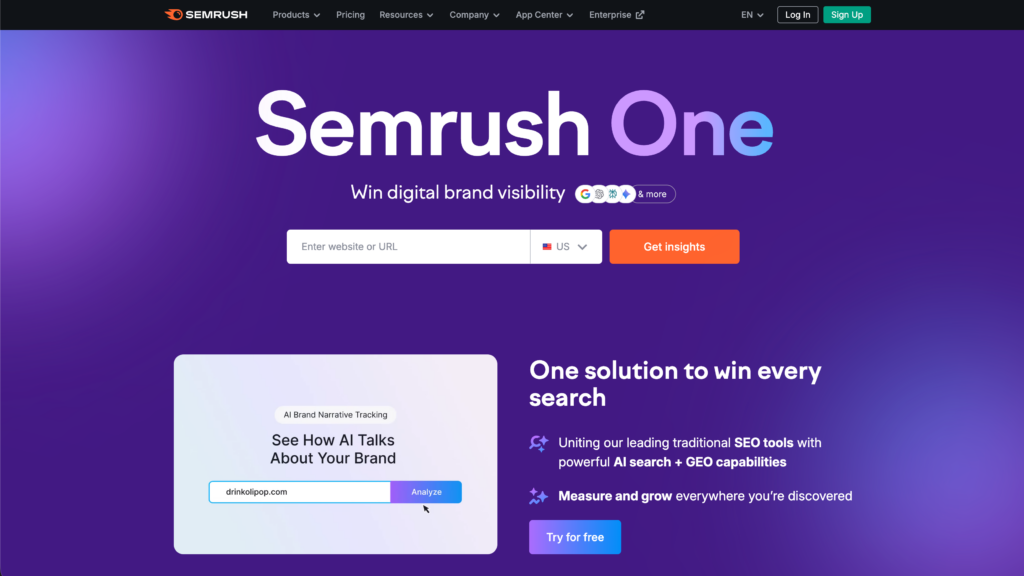
Semrush is the all-in-one marketing platform that added AI visibility tracking to its existing SEO toolkit. If you’re already using Semrush for SEO, the AI monitoring features are a natural extension.
Key Features
The AI Visibility Toolkit tracks your brand across ChatGPT, Perplexity, and Google AI Overviews. The “Key Business Drivers” heatmap shows which attributes AI associates with your brand versus competitors (e.g., winning on “Support” but losing on “Price”).
Narrative analysis breaks mentions into branded (people asking for you by name) versus non-branded (people finding you via category search). This helps you understand if you have a brand awareness problem or a category authority problem.
Beyond AI monitoring, you get Semrush’s full SEO suite: keyword research, competitor analysis, position tracking, backlink analysis, and site audits.
Pricing
| Plan | Monthly (Annual) | Monthly (Month-to-Month) | Websites | Keywords Tracked |
|---|---|---|---|---|
| Pro | $117.33 | $139 | 5 | 500 |
| Guru | $208.33 | $249 | 15 | 1,500 |
| Business | $416.66 | $499 | 40 | 5,000 |
The AI Visibility Toolkit is included in all plans. API access requires the Business plan. Additional users start at $45/month.
Source: Semrush pricing
Pros and Cons
Pros:
- SEO + AI monitoring in one platform
- Strong visual reporting for executive presentations
- Integrates with existing SEO workflows
- Comprehensive marketing intelligence beyond brand monitoring
Cons:
- Limited support for Claude and emerging models compared to GetMint
- Add-on costs can push price higher
- Learning curve for the full platform
GTM Use Case
Semrush fits SEO-driven GTM teams who want to understand both traditional search rankings and AI visibility in one dashboard. If you’re already investing in SEO, the AI monitoring features provide additional context without requiring a separate tool. For teams starting from scratch, the learning curve and cost may be barriers.
How to Choose the Right Brand Mention Tool
The right tool depends on your budget, team size, and what you’re trying to accomplish.
Budget-conscious teams: Brand24 offers the best value for comprehensive monitoring. At $199/month (annual), you get AI-powered insights, unlimited users on Team+, and coverage across virtually every source.
Enterprise organizations: Brandwatch delivers deep social intelligence if you have the team and budget to extract value. For most, it’s overkill.
AI-first monitoring: GetMint is the only choice for tracking LLM outputs. If you’re concerned about AI hallucinations or want to optimize for generative search, you need this capability.
SEO-focused teams: Semrush combines traditional SEO with AI visibility tracking. If you’re already using Semrush, this is a natural extension.
All-in-one social: Sprout Social makes sense if you need social publishing AND listening in one platform. Be prepared for the total cost with the listening add-on.
PR and communications: Meltwater remains the standard for media monitoring, journalist databases, and broadcast tracking.
Implementation Tips for GTM Teams
Once you’ve chosen a tool, here’s how to get value quickly:
- Set up competitor monitoring for sales intel. Track competitor brand names plus keywords like “alternative,” “vs,” “switching from,” or “looking for.” Route these alerts directly to your sales team.
- Configure intent keywords. Beyond your brand name, monitor category keywords that indicate purchase intent. Someone asking “best CRM for startups” is a lead, even if they don’t mention you by name.
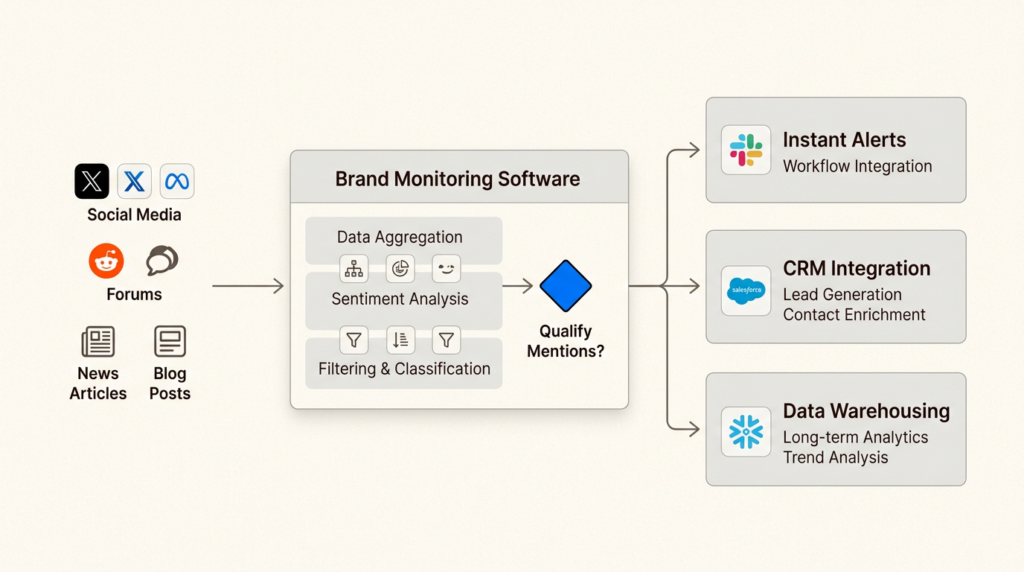
- Integrate with your existing stack. Most tools offer Slack or Teams integrations. Set up channels for different types of mentions (crises, opportunities, competitor mentions) so the right people see the right alerts.
- Create executive dashboards. Brand monitoring data is valuable for leadership. Set up automated reports showing sentiment trends, share of voice versus competitors, and emerging topics.
- Warehouse your data. For advanced analysis, export mention data to your data warehouse. Build dbt models to track long-term trends, correlate mentions with revenue, and identify leading indicators.
Final Recommendations
For most GTM teams in 2026, we recommend a two-tool approach:
- Brand24 for comprehensive social listening ($199/month). It covers all the sources you need with strong AI features at a reasonable price.
- GetMint for AI search monitoring (€79/month). As AI engines become primary research tools for buyers, tracking what they say about you is non-negotiable.
This combination gives you complete visibility into both human conversations and AI-generated opinions for under $300/month. That’s a fraction of what enterprise tools like Brandwatch or Meltwater cost, with better coverage of the AI landscape.
Start with free trials to test TTV. Brand24 offers 14 days, GetMint has a free start option. Within a week, you’ll know if the insights justify the investment.
Frequently Asked Questions
Do you need expensive enterprise tools for effective brand mention monitoring?
Not necessarily. For most GTM teams, Brand24 at $199/month provides comprehensive monitoring across social, news, blogs, and reviews. Enterprise tools like Brandwatch add features most teams won’t use. Start with affordable options and upgrade only when you hit limitations.
How do brand mention tools differ from Google Alerts?
Google Alerts only tracks web mentions and updates slowly. Brand mention tools monitor social media in real-time, provide sentiment analysis, track competitor mentions, and offer AI-powered insights. If you’re serious about reputation management, Google Alerts isn’t enough.
Can brand mention tools track what ChatGPT says about my company?
Most traditional tools cannot. Only AI-native platforms like GetMint and Semrush’s AI Visibility Toolkit track LLM outputs. In 2026, this capability is essential since buyers increasingly use AI engines for research.
What’s the typical time-to-value for brand mention tools?
Most tools provide immediate value upon setup. You’ll see historical mentions within minutes and real-time alerts going forward. However, extracting strategic insights (trend analysis, competitive intelligence) typically requires 2-4 weeks of data accumulation.
How do you calculate ROI on brand mention tools?
Measure crisis response time (faster detection = less damage), competitive win rates (from intent signal tracking), and lead generation (from monitoring competitor complaints). Many teams find that one competitive win or crisis averted pays for a year of monitoring.
Should you monitor competitors with these tools?
Absolutely. Set up alerts for competitor brand names plus keywords like ‘alternative’ or ‘problems with.’ When customers complain about competitors, you get immediate notification with context. This turns brand monitoring into a lead generation channel.
What integrations should GTM teams prioritize?
Slack or Teams for real-time alerts to the right people, CRM integration for routing intent signals to sales, and data warehouse connections for long-term analysis. API access becomes important as you mature your brand monitoring strategy.
Leave a Reply